
Why Good Jobs Can Still Feel Wrong
On paper, it was a great job.
As a Hall Director, I had free rent.
Utilities were covered.
Internet. A food plan that my then girlfriend, now wife received too. Parking.
For that stage of life, it was what many would call a cushy role.
Sure, there were late-night knock-and-talks and the ups and downs of living in community with college students. But the perks were real. Financially, it made sense. Professionally, it was stable.
And yet, something felt off.
Not broken. Not toxic.
Just… limiting.
When “Good” Is Not Enough Anymore
Here’s what I’ve learned:
A job can be good and still be wrong for your next season.
What made my role feel misaligned wasn’t compensation or culture. It was growth.
I wanted to expand my impact. I wanted to reach more students. I wanted to build programming at a larger scale. And after being overlooked for new opportunities and advancement, I realized something difficult, but freeing:
If I wanted to grow, I would likely have to leave.
That’s the tension high performers face.
You are competent. You are respected. You are doing well.
But doing well is not the same as growing.
Growth and Impact Matter More Than Perks
The real issue was not the benefits.
It was autonomy and impact.
Living on campus meant abiding by institutional rules that extended beyond work hours. That made sense for the role, but long-term, I knew it would not fit the life I wanted to build. Eventually, I would have children. We would outgrow the space and my priorities would shift.
Many professionals stay stuck in good jobs because the perks feel like proof they should be satisfied. But perks do not replace purpose.
And comfort does not replace calling.
The Moment You Realize You’ve Outgrown the Role
Outgrowing a role does not mean you failed.
It means you evolved.
For me, the realization was simple: I wanted to create meaningful programming on a larger scale. I wanted room to design, innovate, and lead differently.
So I left.
I moved into a multicultural affairs coordinator role at another institution. I was still working with students, but I no longer lived among them. I had more autonomy. I could create impactful programming. I could stretch.
The benefits changed.
But so did my growth.
Six years later I would I would move on to a role as a lecturer at another institution. Proving that some jobs are good, but they're not meant to stay in forever.
Why Good Jobs Still Feel Wrong for Professionals
If you’re reading this and thinking, “My job is good. Why do I feel unsettled?” here are a few reasons:
You’ve mastered the role, but you’re not being stretched.
You want broader impact, not just daily tasks.
You’ve evolved, but your job description hasn’t.
You’re clear on expectations, but unclear on your direction.
You are comfortable, but not challenged.
None of these mean you should panic. They mean you need clarity.
Before You Quit, Get Clear
The biggest mistake professionals make is assuming discomfort means immediate exit.
Sometimes it does.
Sometimes it means you need a new environment.
And sometimes it means you need a new level of clarity about what you actually want next.
When I left my Hall Director role, it was not emotional. It was strategic. I had identified what was missing: growth, autonomy, and expanded impact.
Clarity allowed me to move forward with confidence instead of resentment.
A Good Job Is Not the Final Goal
There is nothing wrong with wanting more from a role that already looks good.
You are not ungrateful.
You are evolving.
The real question is not, “Is my job good?”
The real question is, “Is this role aligned with who I am becoming?”
If that question keeps coming up for you, it is worth exploring.
Ready to Get Clear?
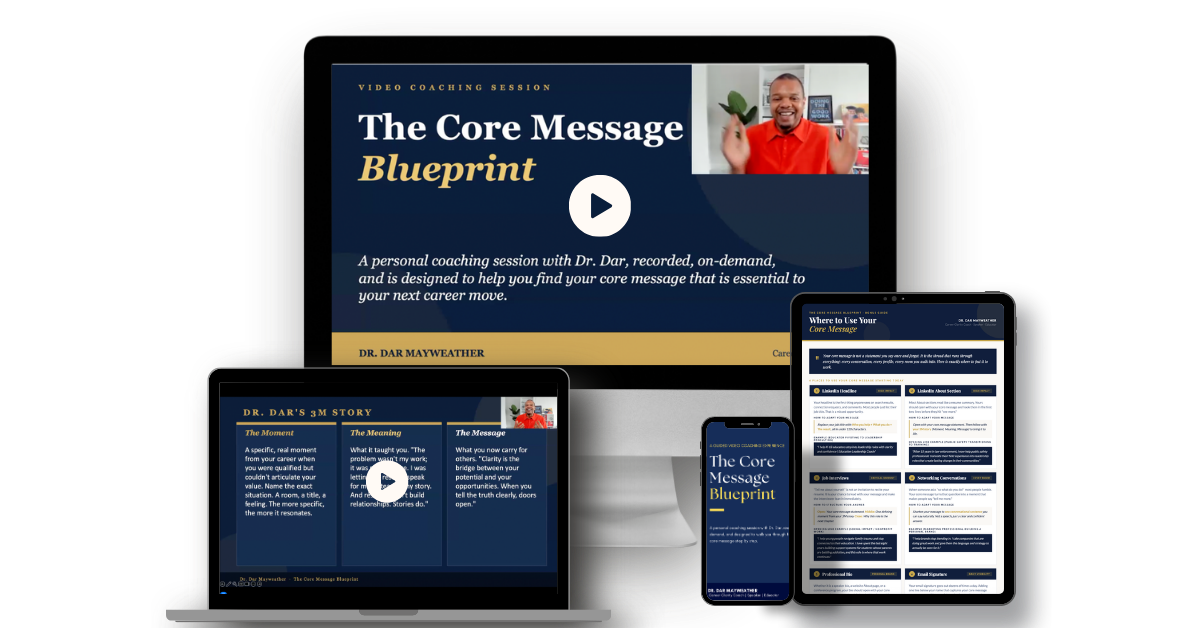
If this post named something you have been feeling, the next step is building the message that changes it. The Core Message Blueprint is a 50-minute recorded coaching session that walks you through how to identify your unique value, articulate it clearly, and position yourself for the opportunities you actually want. One session. One framework. $27.
👉Get it here: https://coaching.drdarmayweather.com/blueprint
You might also like this blog: 3 Mistakes Professionals Make Before Changing Careers


